
Pacemakers, ICDs and Rhythm Devices
When the heart beats too slowly or is at risk for a dangerous rhythm, a small implanted device can help. FCCI's electrophysiologists place and care for pacemakers, ICDs and CRT devices.
Devices FCCI electrophysiologists work with
- Pacemakers help when the heart beats too slowly. Dr. El Sabbagh has specialized in device-based therapies since 2012.
- ICDs (implantable cardioverter defibrillators) watch for dangerous fast rhythms.
- CRT (cardiac resynchronization therapy) is used for some people with heart failure.
- Conduction system pacing is a pacing approach Dr. Pasupula is proficient in, along with all other cardiac implantable electronic device procedures.
FCCI physicians were also among the first to implant the Boston Scientific S-ICD System, a treatment for patients at risk for sudden cardiac arrest, at St. Vincent's Medical Center Southside in 2015.
Your doctor will choose the device based on your rhythm, your heart's pumping strength and your overall health. Not everyone with AFib needs a device.
Ask how the device will be checked over time.
Lead extraction and device infections
Devices connect to the heart with thin wires called leads. Sometimes a lead needs to come out, for example if it stops working or if there is an infection.
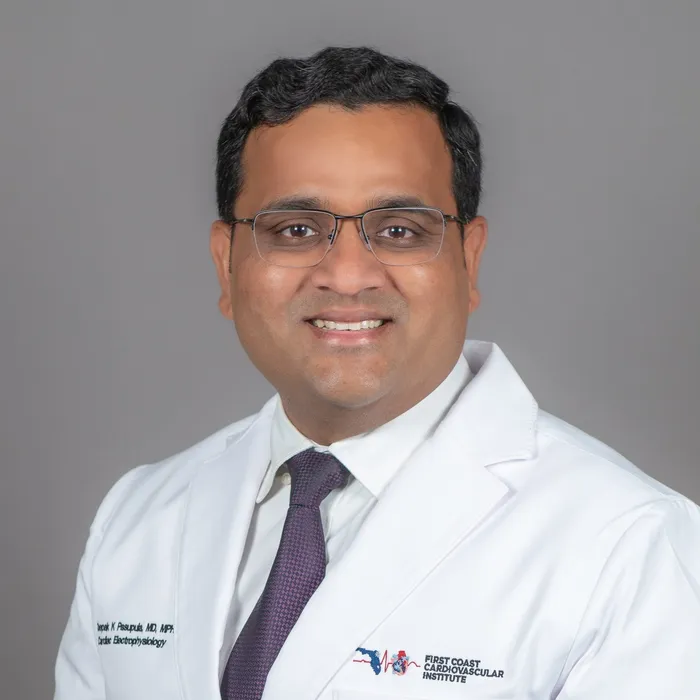
Dr. Deepak Kumar Pasupula has a keen interest in managing patients with cardiac device infections and lead extraction. He is well-versed in both mechanical and laser-guided lead extraction.
If you already have a device and something feels off, like a new fever, redness or swelling at the device site, or new dizziness, call your doctor's office. If you have fainting, chest pain or trouble breathing, call 911.
Device infections need prompt care, so do not wait to call if something looks wrong.
Write down the name of your device and keep it with your medicine list.

Devices and AFib
AFib can make the heart beat too fast or too slow. Some people with AFib also need a pacemaker, especially if their heart rate drops too low. Others need a device for a separate rhythm problem.
Your heart rhythm doctor will look at your full history and testing before recommending any device. Good questions to ask:
- Why do I need this device?
- What will day-to-day life look like after it is placed?
- How often will it be checked?
Call 904.493.3333 to schedule with an FCCI electrophysiologist.
Carry your device card and tell every doctor and dentist that you have one.
Bring your questions in writing so nothing gets missed during the visit.
A device is one tool among many, and your plan is built around you.
Talk with a specialist.
New patients are welcome. Call 904.493.3333, Mon to Fri, 8am to 5pm, or request a visit online.
Who places pacemakers at FCCI?
FCCI's electrophysiologists, Dr. Firas El Sabbagh and Dr. Deepak Kumar Pasupula, work with pacemakers, ICDs, CRT and other heart rhythm devices.
What is lead extraction?
It is removing a device wire from the heart. Dr. Pasupula is well-versed in mechanical and laser-guided lead extraction.
What if my device site looks red or swollen?
Call your doctor's office. If you also have chest pain, fainting or trouble breathing, call 911.